The Origins of R42.
Early Questions
I’ve asked “why” for as long as I can remember. Not to disrupt, but because I wanted to understand. Even as a kid, something about the world felt slightly off, as if I was watching the people around me follow patterns that didn't add up. It often felt like observing a play from the side rather than being part of it. While others moved through the motions seemingly mechanically, I kept wondering why things unfolded the way they did and how to make sense of it all.
Misaligned Success
After school I entered the real estate industry. At that point, I had no real understanding of my own interests or how to explore them. I tried to fit in, meet expectations and avoid friction. So I settled for what sounded right: something stable, playing it safe. I advanced quickly and learned how to perform under pressure, but the same question kept hovering over me, only louder: why? Soon my days were filled with emails, numbers and reports, yet most of it felt hollow. What I lacked wasn’t success — it was purpose.
Over the years the internal friction grew. I tried to escape it by changing companies and seizing higher positions. I became an asset manager in Berlin, managed portfolios for international clients and found myself in meetings with people who could have been straight out of a movie scene. From the outside, it looked like achievement; but every step higher in responsibility and pay deepened the mismatch between my actions and what I considered meaningful. On the inside, it felt like slow erosion, stretched over many years.
During that time, travel became my attempt to inject significance into emptiness. Whenever I could, I went to places that felt raw and unfiltered. But each journey made it harder to reconcile the contrast between other people’s harsh reality and the golden cage I had built around myself.
Eventually, I quit. My energy was depleted. The divide between who I had become and how I wanted to live was no longer bearable. After years of waking up to that reality, I walked away. Leaving meant giving up comfort, money, validation and stability — but it also meant moving with integrity, curiosity and compassion, both for myself and for others.
Walking Away — The First Reset
The year that followed was a slow decompression. I finally allowed myself to rest. I slept when I was tired, went for walks and began creating ambient soundscapes as a way to digest and explore without expectation. I immersed myself more deeply in philosophy and meditation practice. Somewhere in that quiet, the long process of acceptance began: people are different. Some genuinely find fulfillment in well-defined paths; and many thrive within strongly structured systems. For some, the traditional idea of success is meaningful and worth pursuing — there’s nothing wrong with that. For me, those frameworks were draining and felt like chains that limited my growth. I started to realize, there was no point in trying to change people or convince them to adopt certain values and beliefs.
The ideas of not reacting to every trigger, finding balance in apparent chaos and focusing on what is actually within our control became some of my main guideposts. Letting go of resentment and the urge to fix the world created space to focus on what I needed to do myself. In my case, that meant making unconventional decisions, which eventually led to my relocation to Taiwan.
Stillness — The Second Reset
With the move to Taiwan, I decided to push the reset button and start over. I assumed life on an island in the Pacific would be quieter, more natural, and that the year of rest I had taken prior could somehow undo decades of accumulated strain. But the silence came with its own storm. Without deadlines or external noise, old symptoms resurfaced and new ones emerged: poor sleep, fatigue, chronic neck pain, constant anxiety and the absence of direction. I found myself in a loop of mental chaos and physical discomfort. The same mind that once thrived under pressure now struggled in its idle state. I learned painfully that it’s not the environment you fight with but your inner world; and that stillness alone doesn’t heal — it reveals what’s been hidden and neglected.
With time, my experience in Taiwan became pivotal. I co-founded satotea, a small brand built around tea meditation with naturally and wild-farmed teas. For the first time, work wasn’t just work but an extension of myself. I brought in my passion for music and photography, created short films and found ways to merge creativity with meaning.
It wasn’t necessarily about the tea itself or its presentation in a ceremonial and meditative way. That certainly brought joy or temporary relief to many guests. But for me, it was about sitting with them, listening and sensing their conflict. Those quiet moments showed me what becomes possible when you genuinely try to understand someone: they feel seen, respected, worthy. That can spark immediate momentum and, progressively, the agency for real change.
Over time, I began to notice that many of my values and schools of thought had gradually turned into a form of work. The attributes that once made me a difficult student or challenging employee had evolved into offering a shift of perspective to those who were stuck.
Room Four Two (R42)
A continuation of the same practice became the foundation for what would grow into R42. It provides space for reflection that brings clarity about where someone stands and how they want to move through life. R42 allows me to engage with individuals in an ongoing and deeply personal way beyond place or form. I support people in finding direction, not by giving them one, but by helping them see what’s already there. To recognize the patterns that exhaust them, the beliefs that keep them confined and the needs that have been neglected. To describe the essence of what happens in a session: a slowly unfolding, honest conversation in a safe space, grounded in active listening. It’s a process that surfaces what’s been buried and the potential that hasn't been expressed yet. It offers material to contemplate and to carry forward on one’s own path.
What I do is not fundamentally new. Every story has been told in one way or another. So what qualifies me isn’t a certification. It’s having lived both extremes — structure and autonomy, intensity and stillness, comfort and collapse — and having found a way to navigate them without losing integrity. It's my way of looking at things and sharing what I have learned along my journey.
Much of human suffering is rooted in two places: lack of purpose and unmet needs. When those stay unaddressed, we can't truly thrive. It shows in our health, relationships, career and how we relate to ourselves. My work through R42 is simply an extension of that realization. It’s where life, with all its complexity, begins to feel whole again.
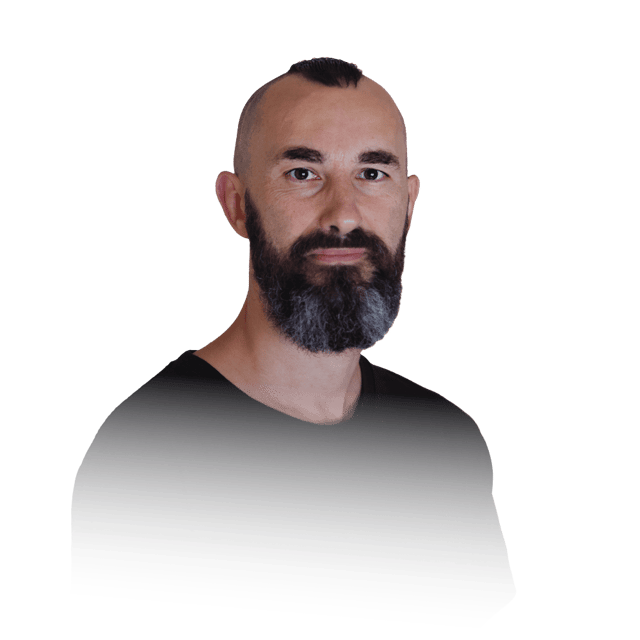
Emanuel